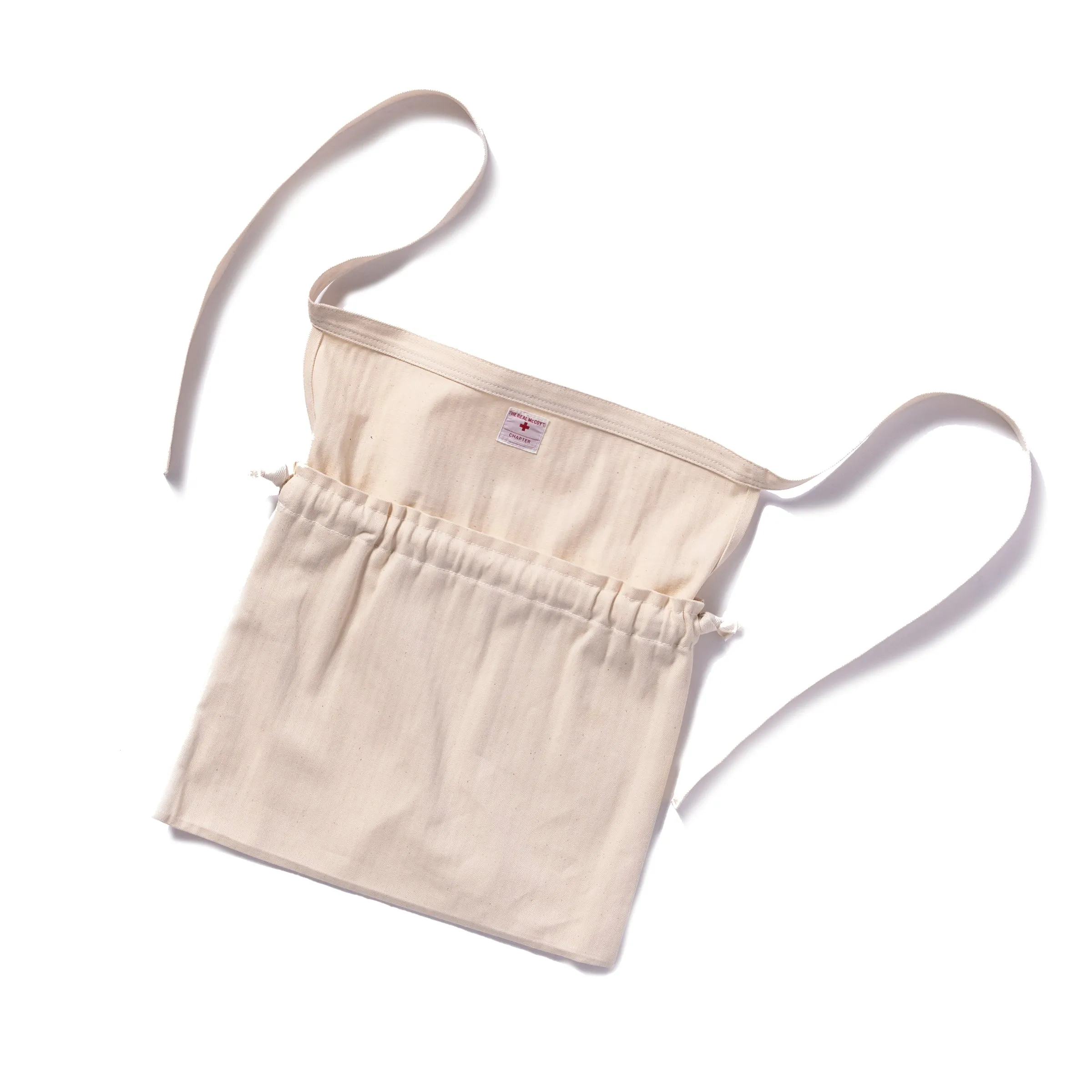
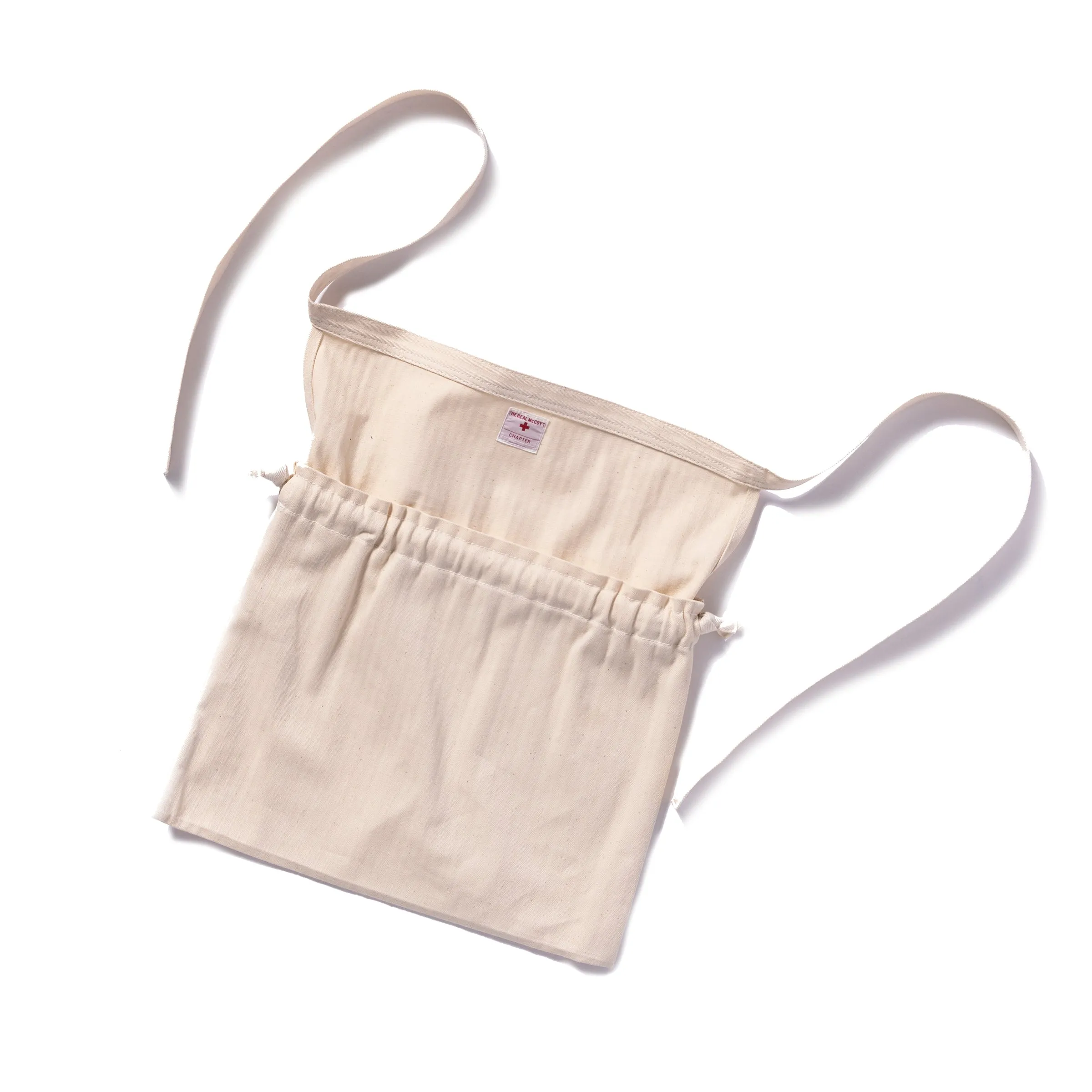
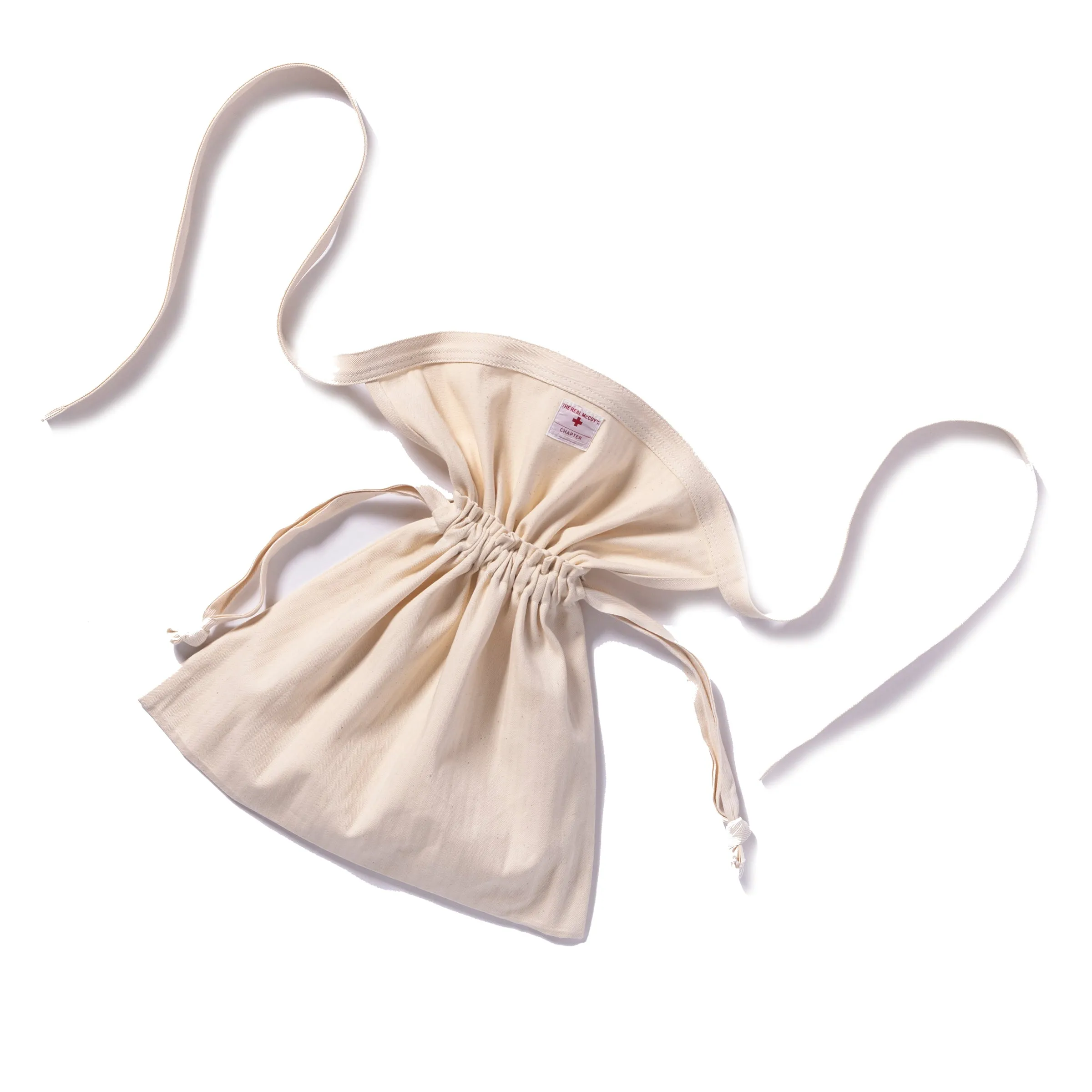
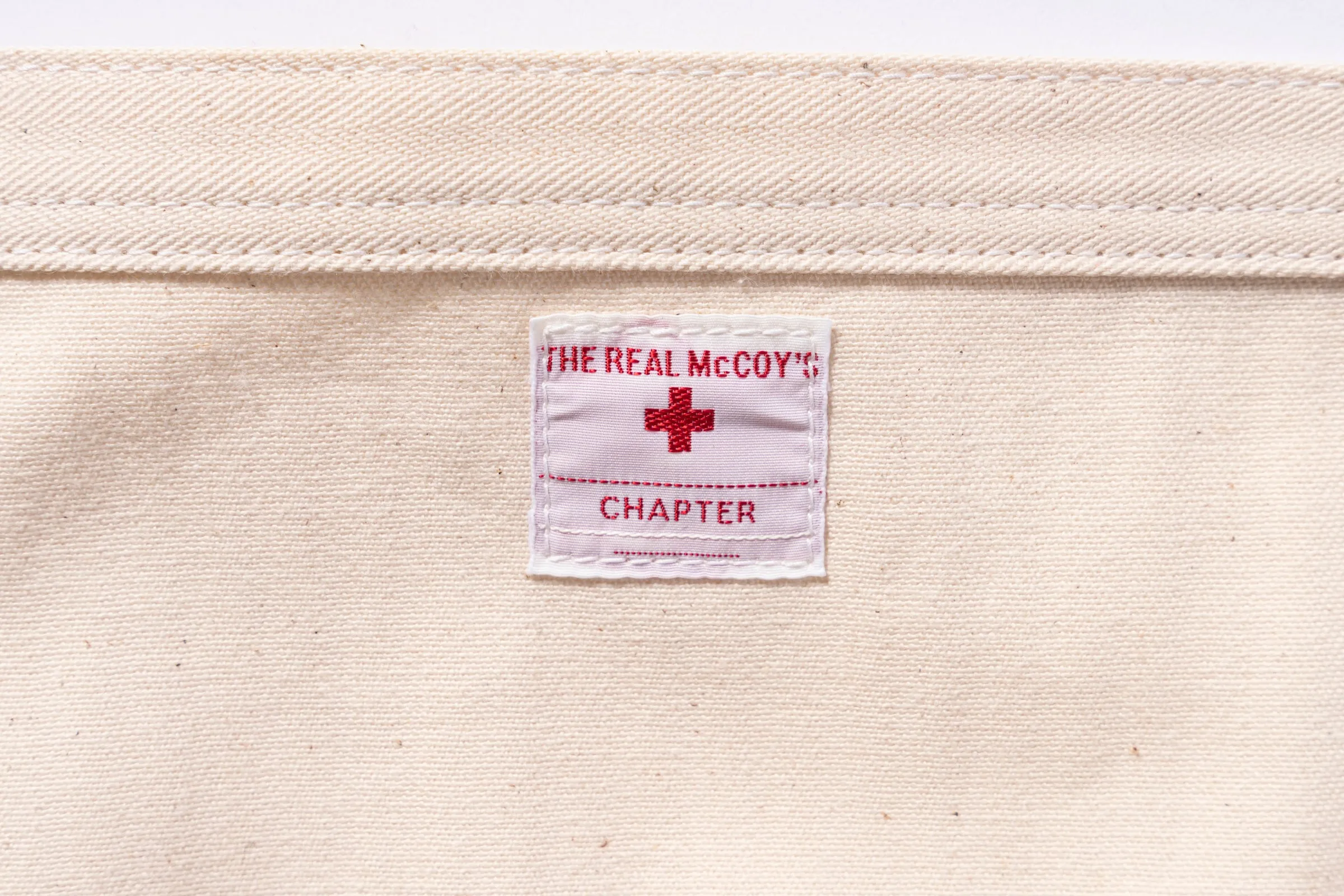
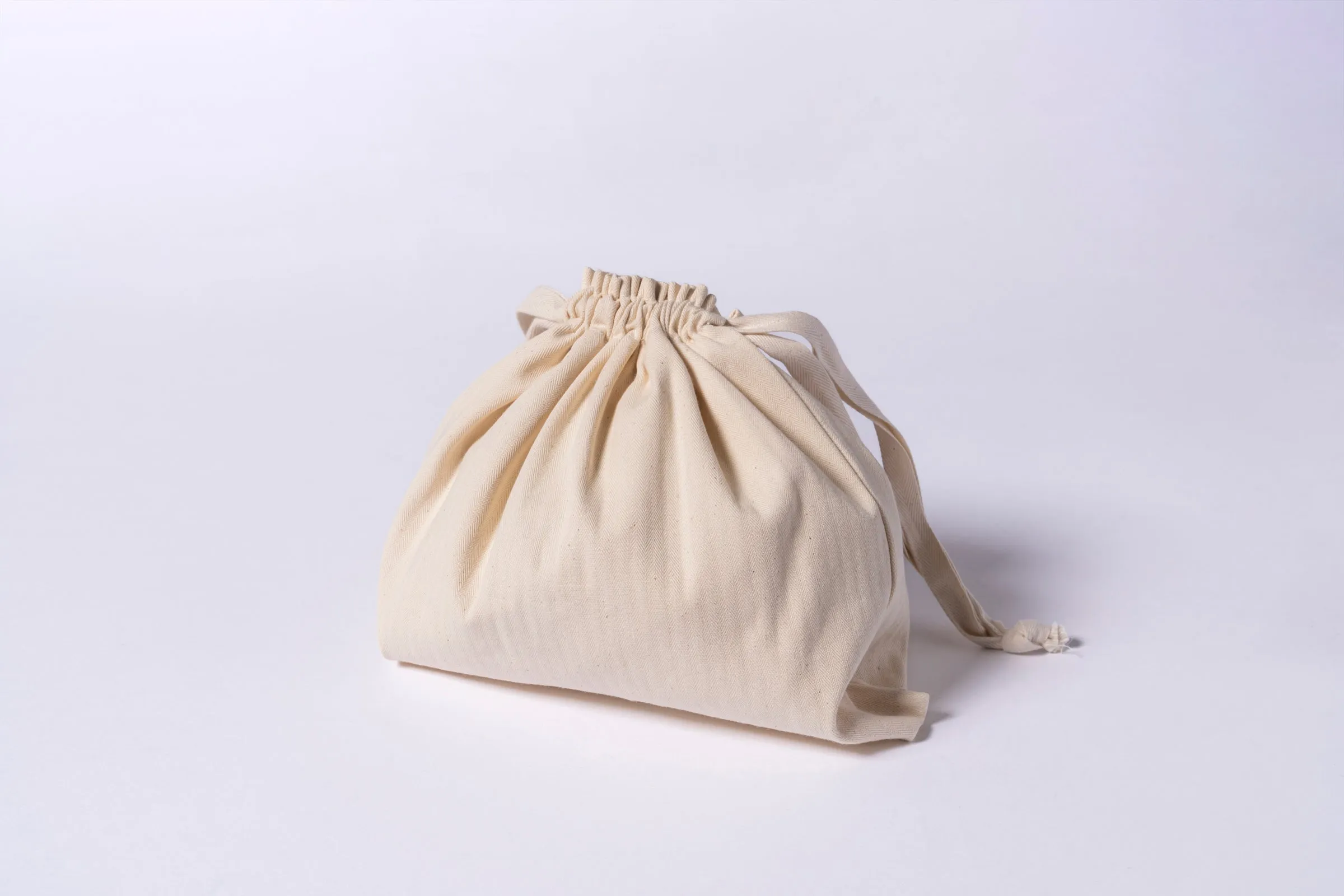
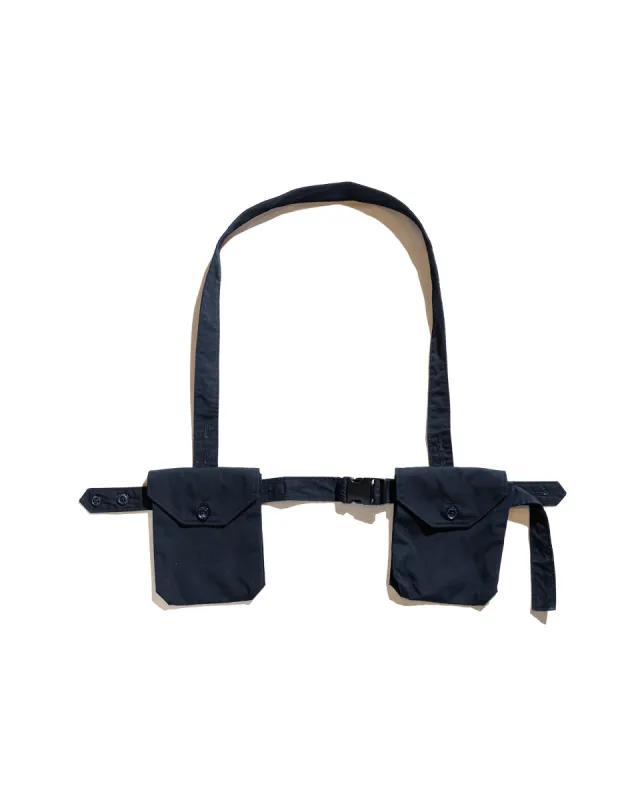
The WHITE HBT APRON BAG combines functionality and history, crafted from raw, undyed herringbone twill fabric. Its versatile design allows it to be worn as an apron or a cross-shoulder bag, featuring a spacious reinforced pocket for essentials. This unique piece draws inspiration from the Ditty Bag used by soldiers during the World Wars, reflecting practicality and a timeless aesthetic. Made in Japan, it offers a nod to both heritage and contemporary style.
From the brand: The WHITE HBT APRON BAG is a cross-shoulder bag for daily wear, constructed from raw, undyed herringbone twill fabric
and features
a reinforced single large apron pocket, one-size waist lashings, single needle construction and bar tack reinforcements.
The Red Cross Apron Bag, on which this
is based
, or ‘Ditty Bag’, as it was commonly known, was used for both field and personal items by soldiers during the First and Second World Wars, as well as later conflicts in Vietnam and Korea.
This example can
be worn
as a small apron tied around the
waist
,
or
tied
around the shoulder.
These bags were made and filled by volunteers who would pass them on to soldiers
being treated
at Red Cross Hospitals.
On occasions
where
a soldier would have areas of their uniform cut away
such
as pockets, the Ditty bag could also be on hand to transport any personal items
that
they were carrying.
Herringbone Twill Fabric
Before the outbreak of WWII, soldiers in the US Army were issued a blue denim jumper, trousers, and hat for fatigue duties, while they used the cotton khaki shirt and trousers as their summer uniform.
However, by the late 1930s, the Army realised a more practical uniform in a better colour was needed. In 1941, a green uniform made from cotton herringbone twill (HBT) fabric, recognisable for its distinctive V-shaped weaving
pattern
was introduced
to replace
both the
denim and khaki cotton uniforms for work and field operations.
Shirts, trousers, coveralls, and caps were produced
and issued to all Army personnel in all
theatres of operation
.
It is
this Olive Green HBT fabric
which
serves as the reference point for the undyed herringbone twill used here.
Cotton Herringbone Twill
Drawstring Closure
Raw, Undyed Fabric with no additional processing
Made in Japan