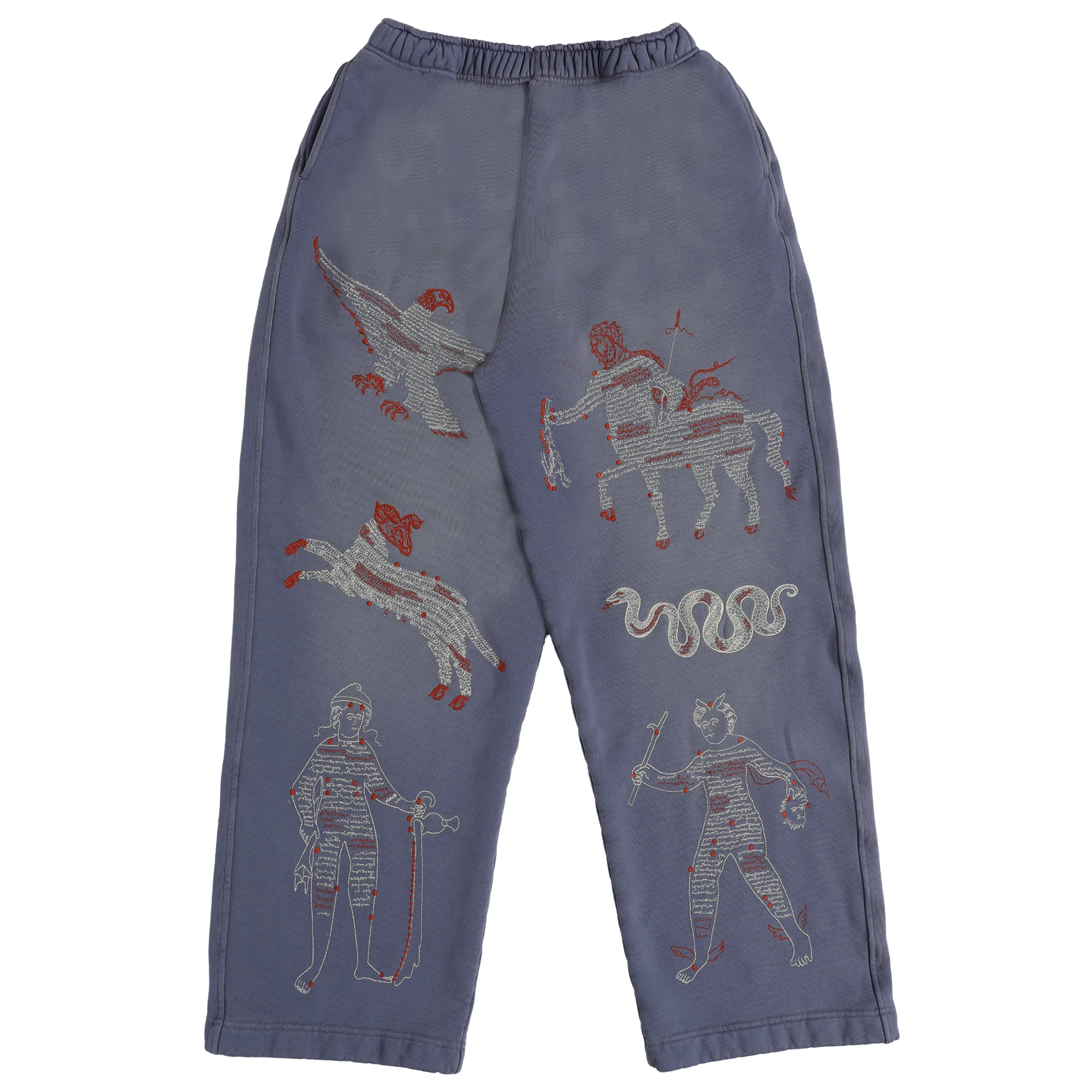
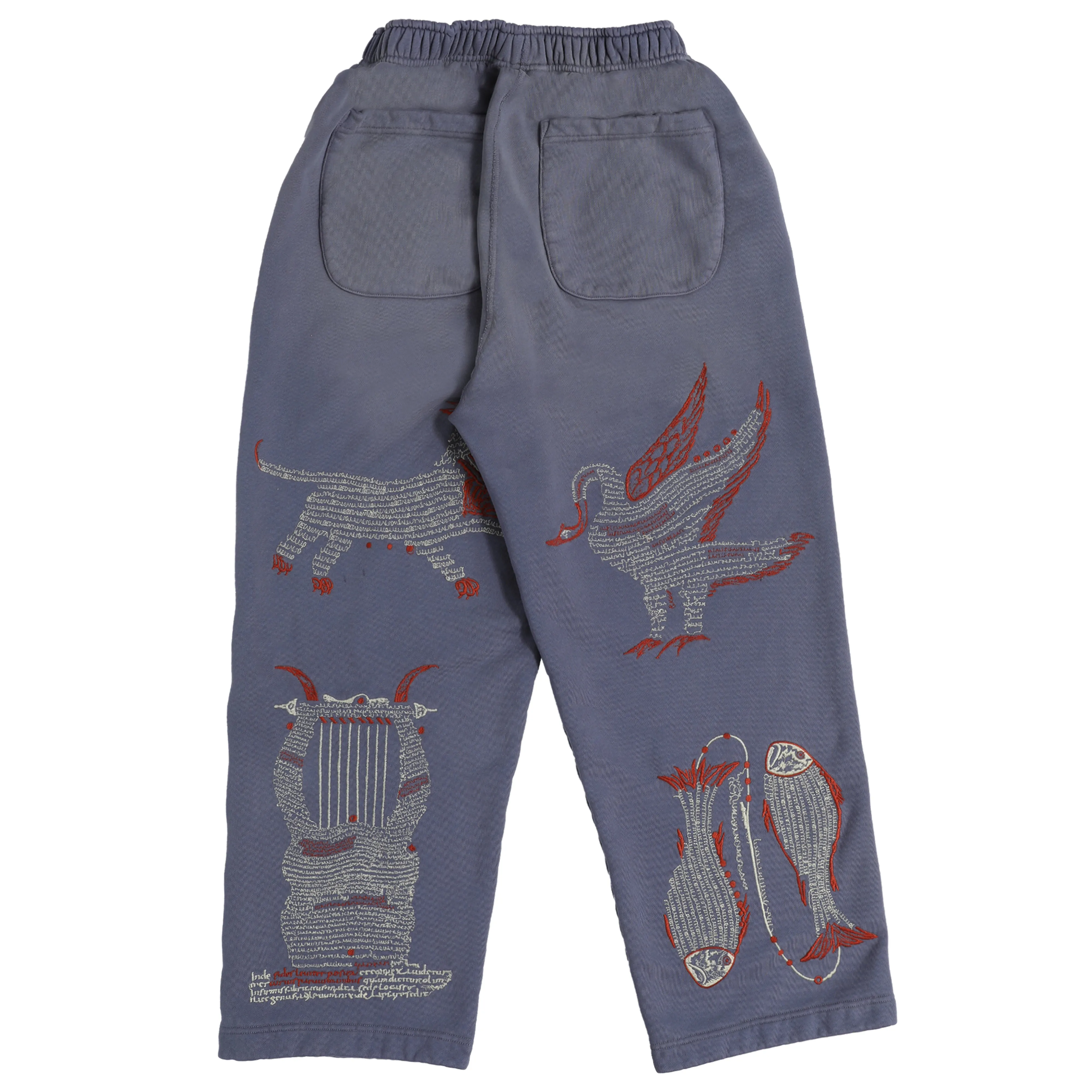
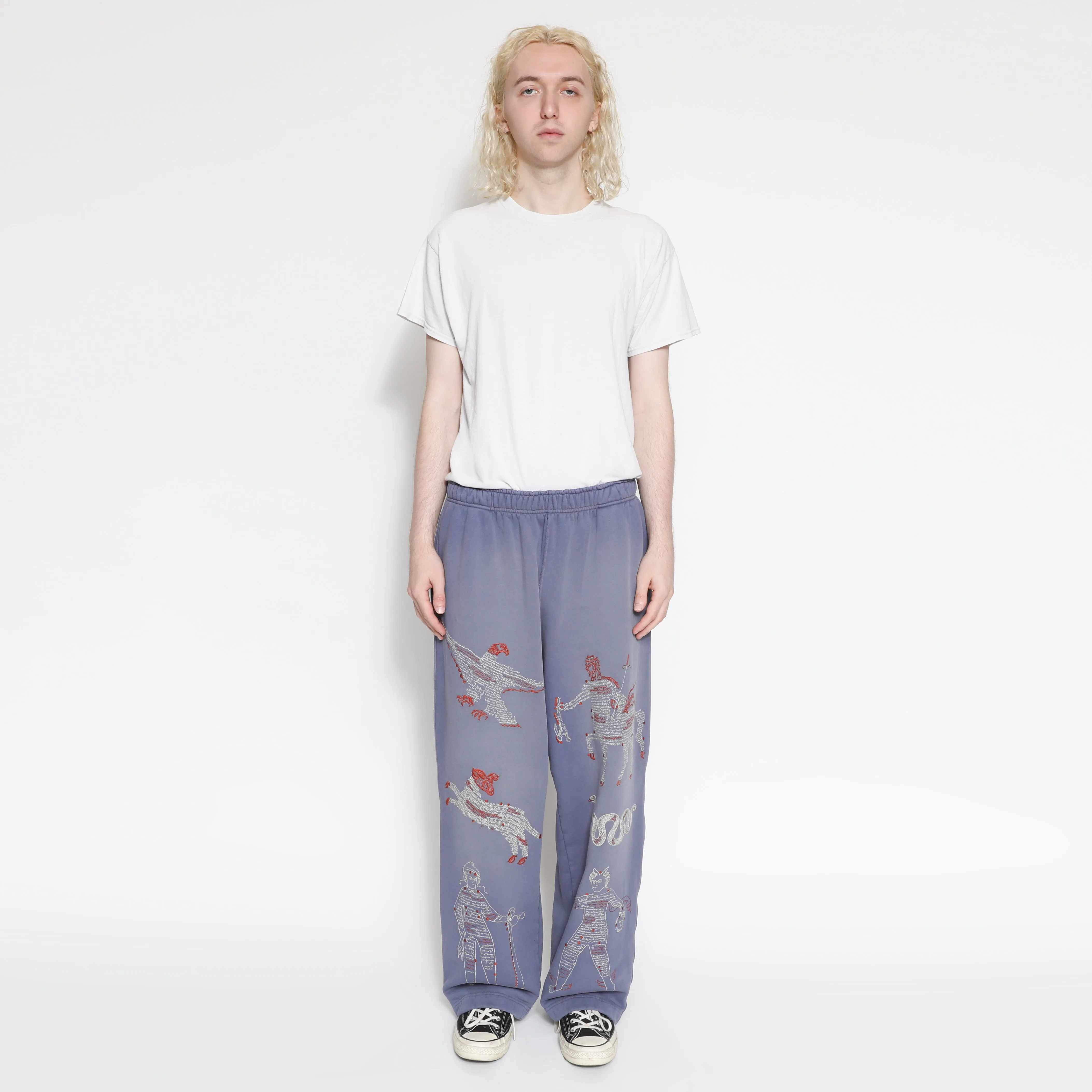
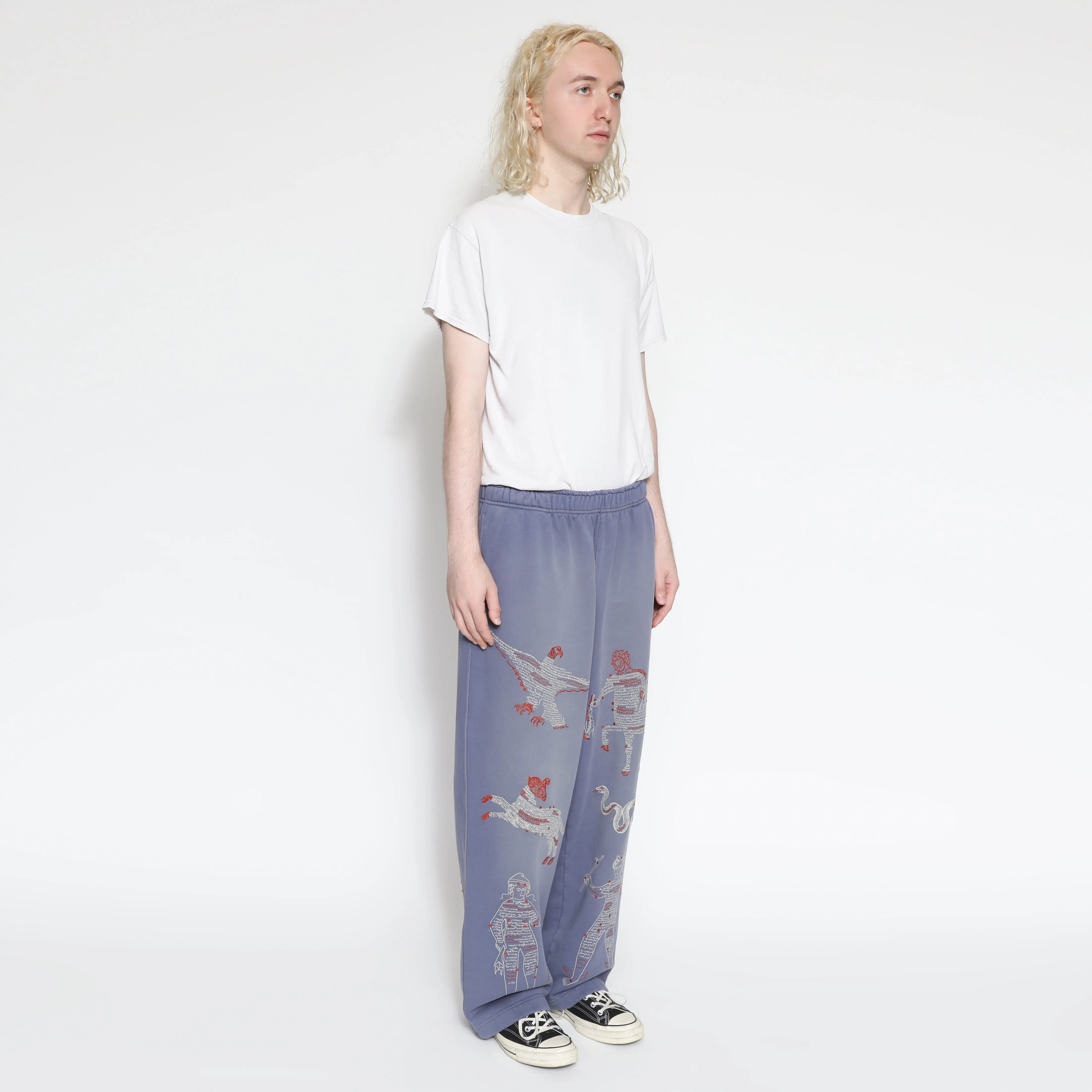
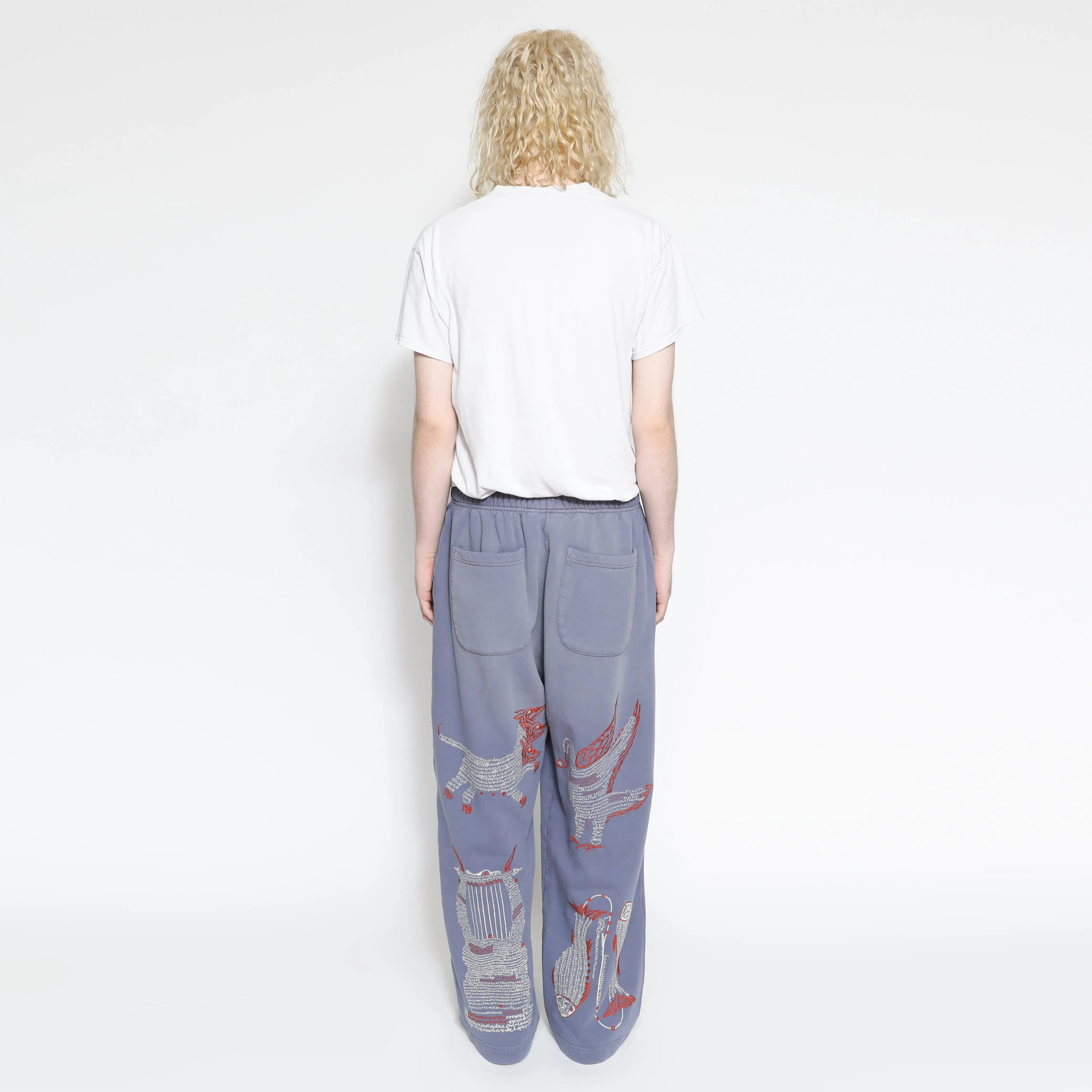
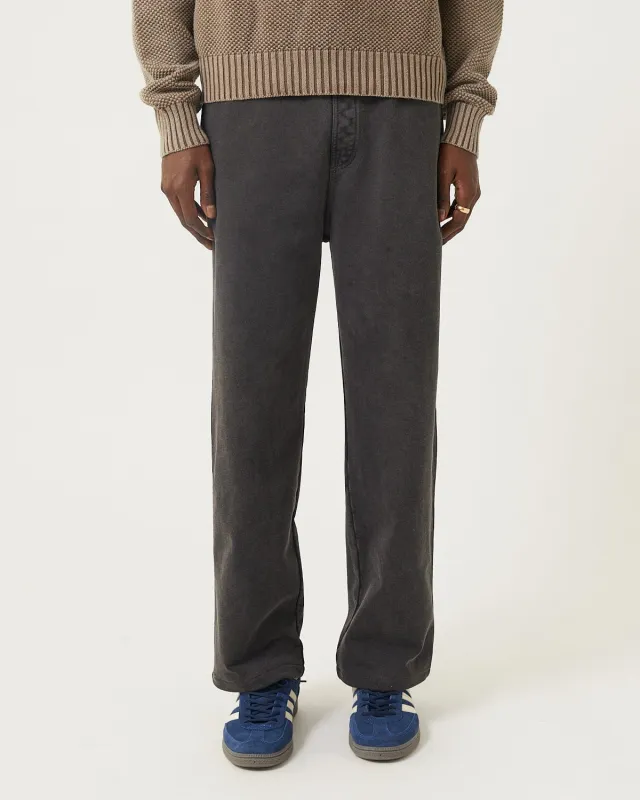
Crafted from heavyweight cotton French terry, these wide-leg pants offer both comfort and style. With flatlock seams and a vintage wash for a sun-faded aesthetic, they feature an elastic waistband with a cotton drawcord for an adjustable fit. Two back pockets provide practicality, while the unique embroidered designs evoke the whimsy of historical marginalia. Perfect for casual outings or lounging, these pants combine quality craftsmanship with an artistic flair, ensuring a standout addition to any wardrobe.
From the brand: Details
15 oz Heavyweight cotton French terry
Flatlock seam construction
Elastic waistband with interior cotton drawcord
Double needle coverstitch at hems
Two Pockets at Back
This garment has undergone a vintage wash and dye to remove all shrinkage and give it a unique sun-faded look
Color: Powder Blue
Embroidery Color: Multi
Size & Fit
Standard Length
Wide Leg
True to size
S
M
L
XL
Waist size range
28-30
30-32
32-34
34-36
front rise
13.75"
14.5"
15.5"
15.75"
back rise
18"
18.25"
19"
19.5"
thigh (flat)
15"
15.5"
16.5"
17"
inseam
29.5"
30"
30.25"
30.25"
leg opening (flat)
10.75"
11.5"
11.75"
12.25"
Care & Origin
100% cotton
Machine wash cold with like colors
tumble dry low
Designed in Los Angeles
Imported
Description
The Medieval Group began with a fascination for illuminated manuscripts. The more we studied them, the more we noticed the strange and often hilarious little creatures monks had drawn into the margins of these intricate, beautiful books. We first imagined solitary monks sneaking a sip of wine and slipping in these drawings as playful liberties—testing what they could get away with. Later we learned this wasn’t just whimsy but an actual tradition known as marginalia: doodles, scribbles, and annotations scattered through the edges of manuscripts. Sometimes they appeared for no clear reason at all, other times because paper was scarce.
Using marginalia as a jumping-off point, we imagined a museum that collects relics of medieval saints and oddities. It felt personal to give this museum the slogan “Illuminated Relics of Helmstedt,” named for the German town where Melissa’s mother grew up and where her grandmother still lives—a town with medieval roots, making the connection all the more fitting.
The drawings in this group reflect both the meticulous detail of medieval penmanship and the irreverent spirit of marginalia: silly demons darting about, angels in flight, and references to the medieval zodiac, once used to guide when medical procedures could or could not be performed during certain periods of the year.