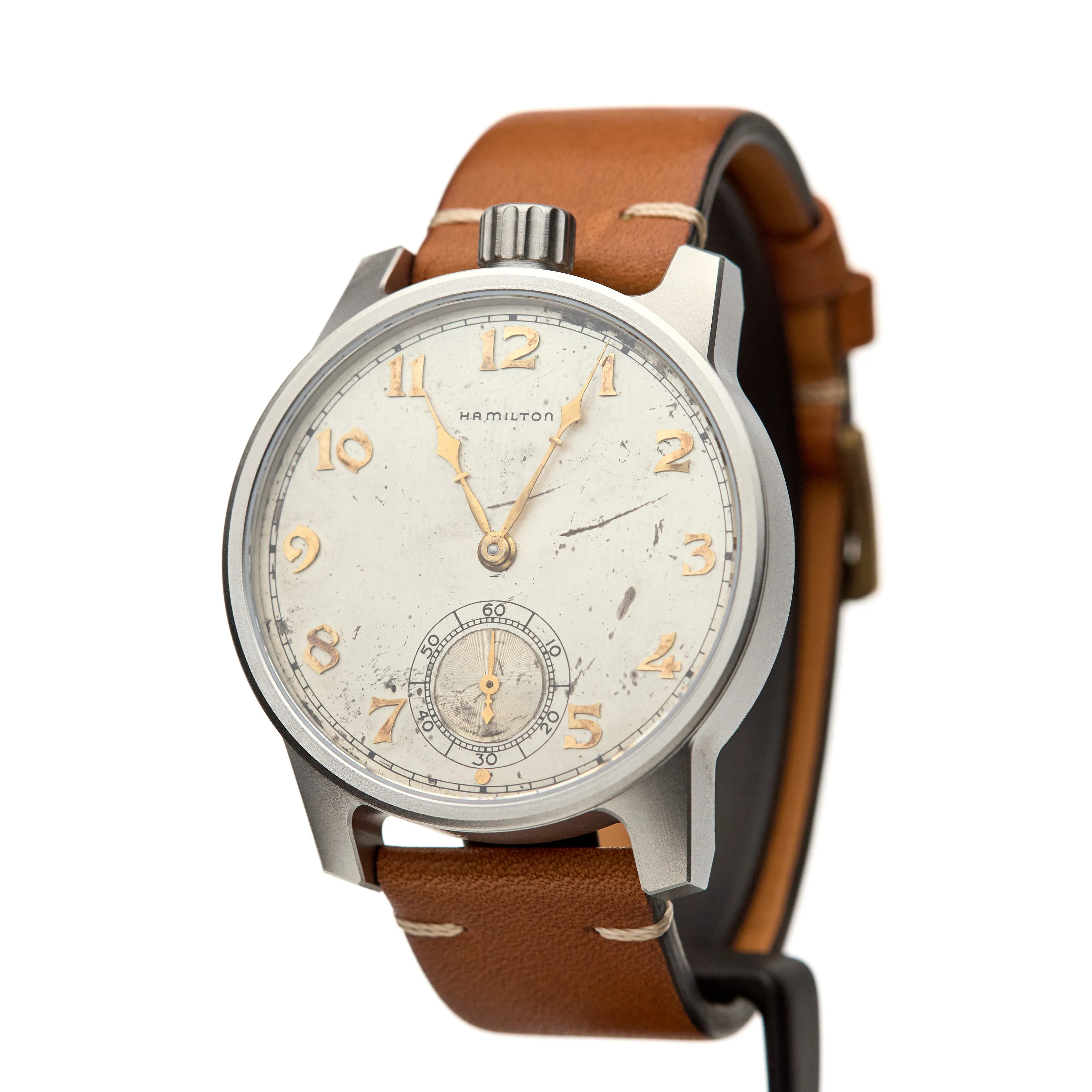
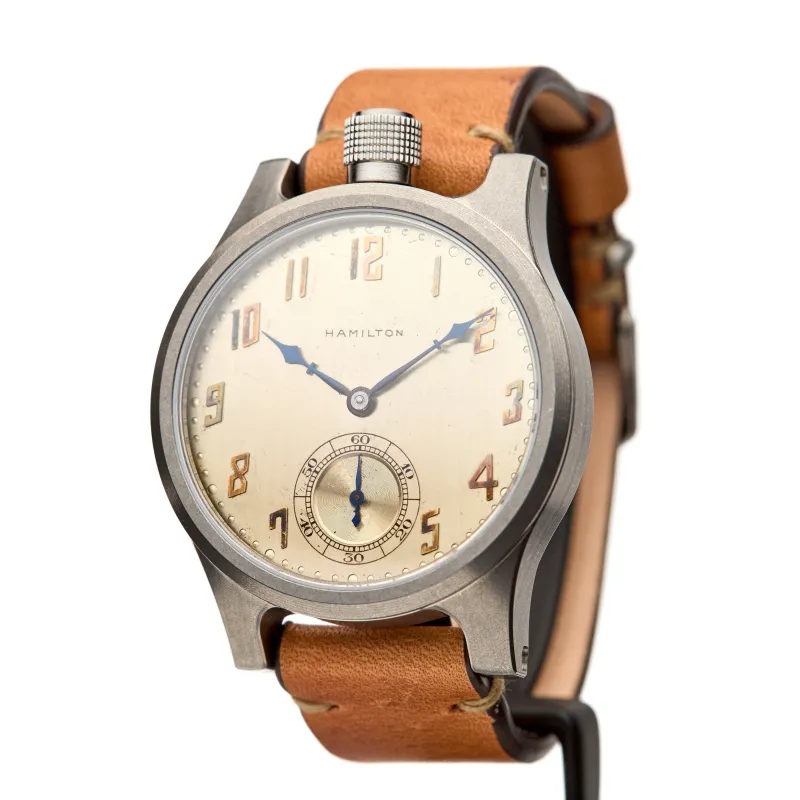
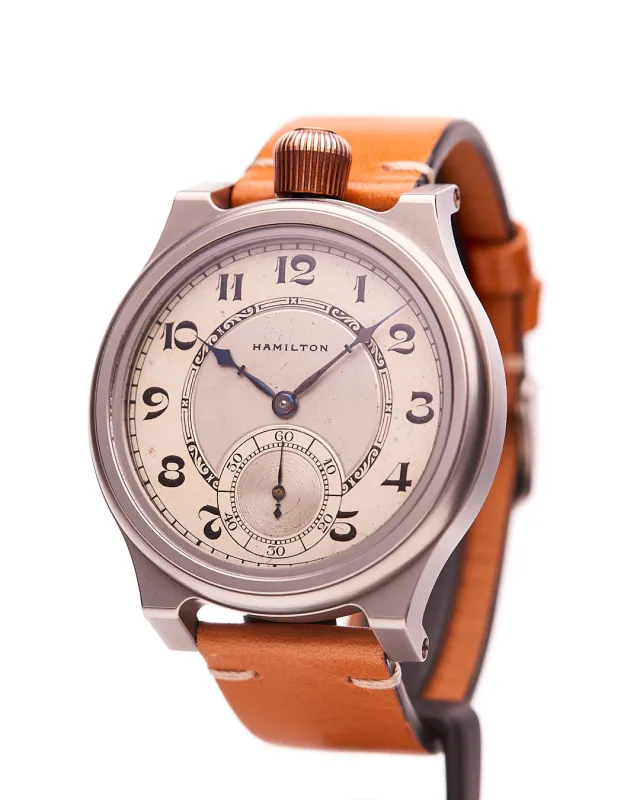
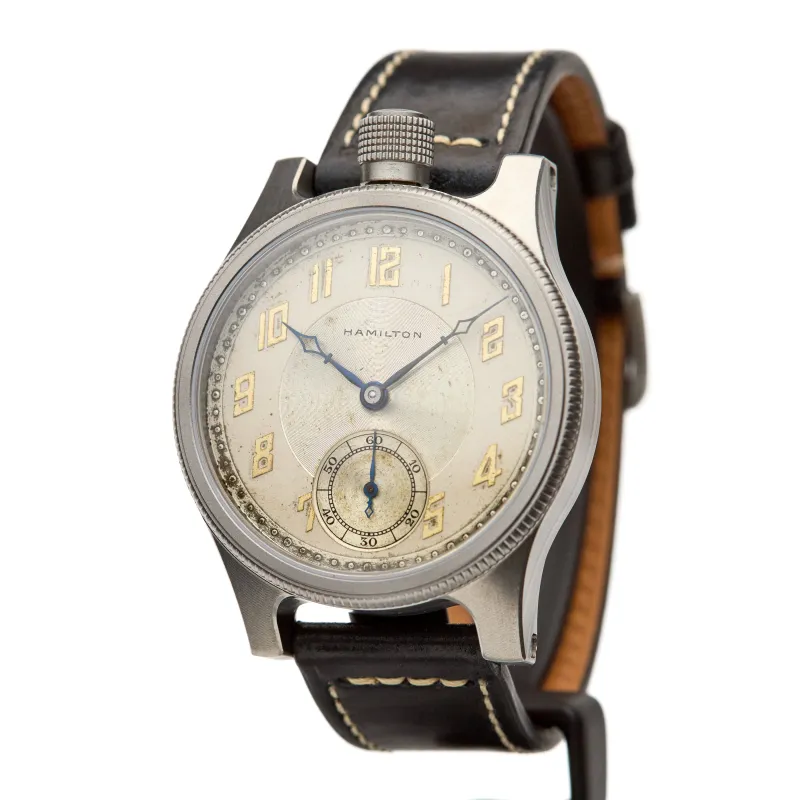
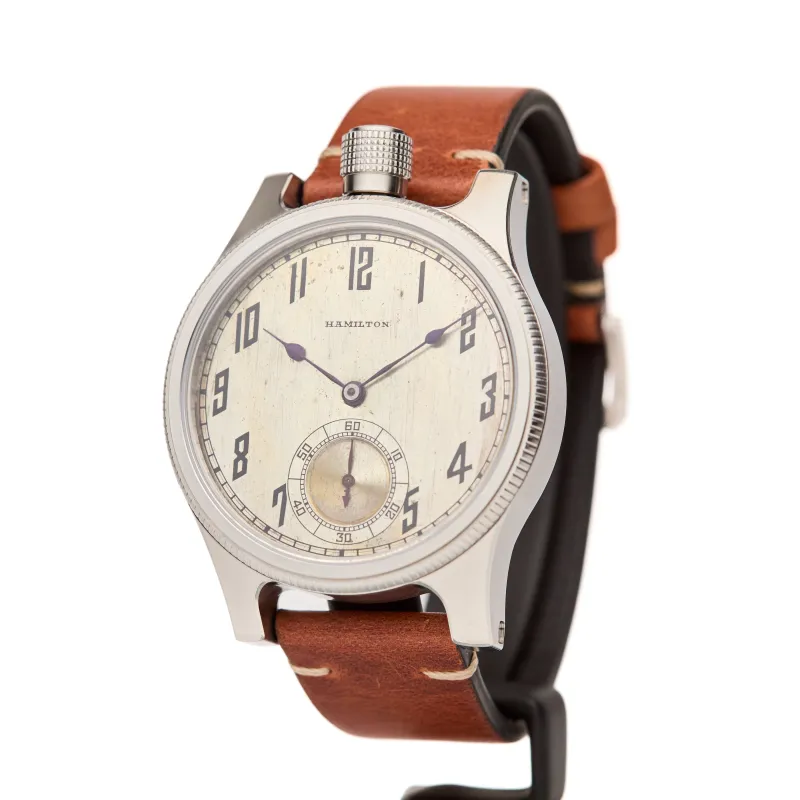
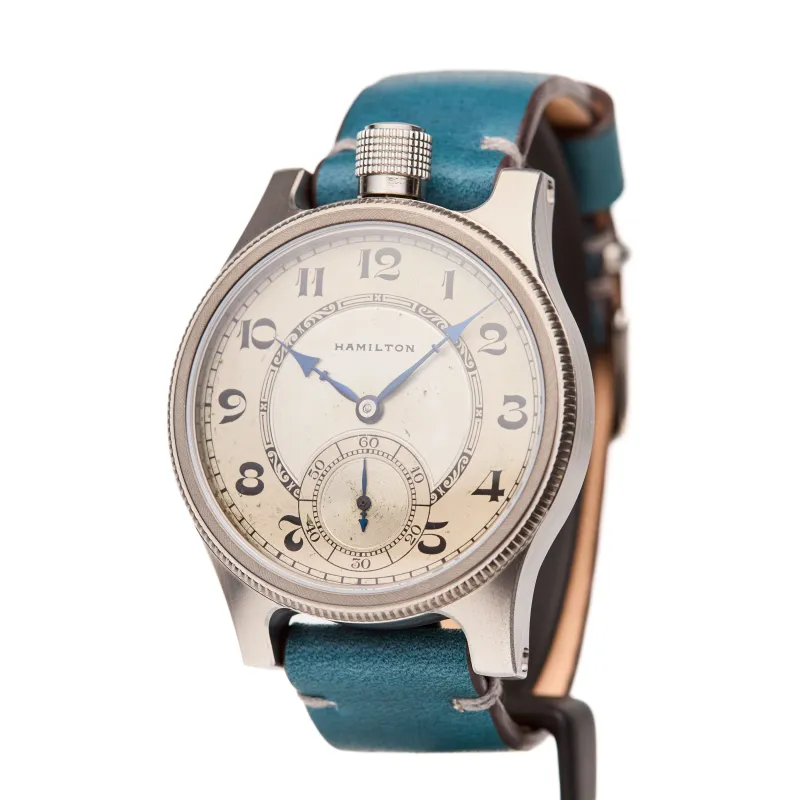
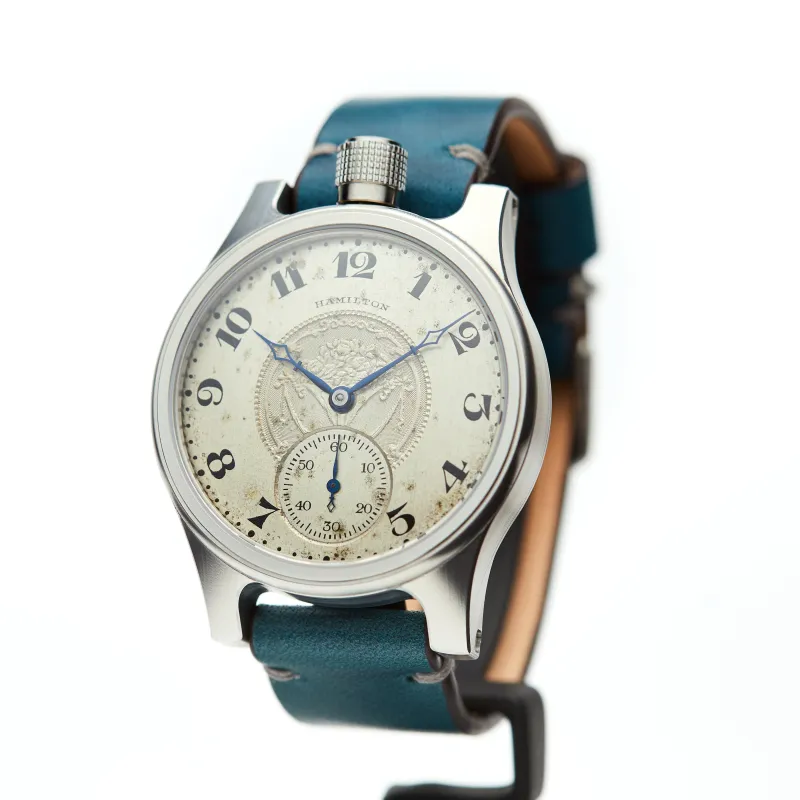
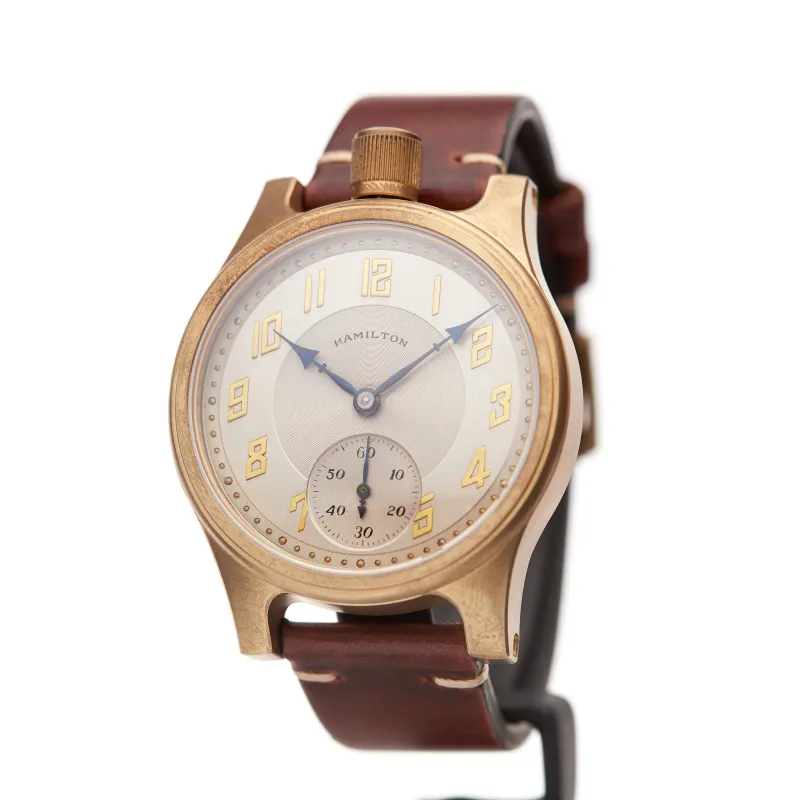
The Lancaster 110 is a striking blend of vintage character and modern craftsmanship. Featuring a distressed white dial with raised gold numerals and closed diamond kite hands, it brings a unique elegance to any outfit. Powered by a 17-jewel Hamilton movement from 1949, this American-made timepiece showcases meticulous engineering. A sandblasted stainless steel case pairs beautifully with a camel-toned leather strap, creating a harmonious balance of textures and colors for those seeking timeless sophistication.
From the brand: What makes the Lancaster 110 unique:
The Lancaster 110 is a masterclass in material contrast and understated elegance. Its distressed white dial wears a century of character, punctuated by a ring of raised gold numerals that catch the light at just the right angles. The numerals’ sculpted forms are paired with a set of bold closed diamond kite hands in a warm gold tone—an uncommon style that adds dimensional presence and echoes the dial’s vintage spirit. A recessed sub-seconds dial sits cleanly at 6 o’clock, framed with crisp railroad-style markers that further emphasize the layout’s precision and balance.
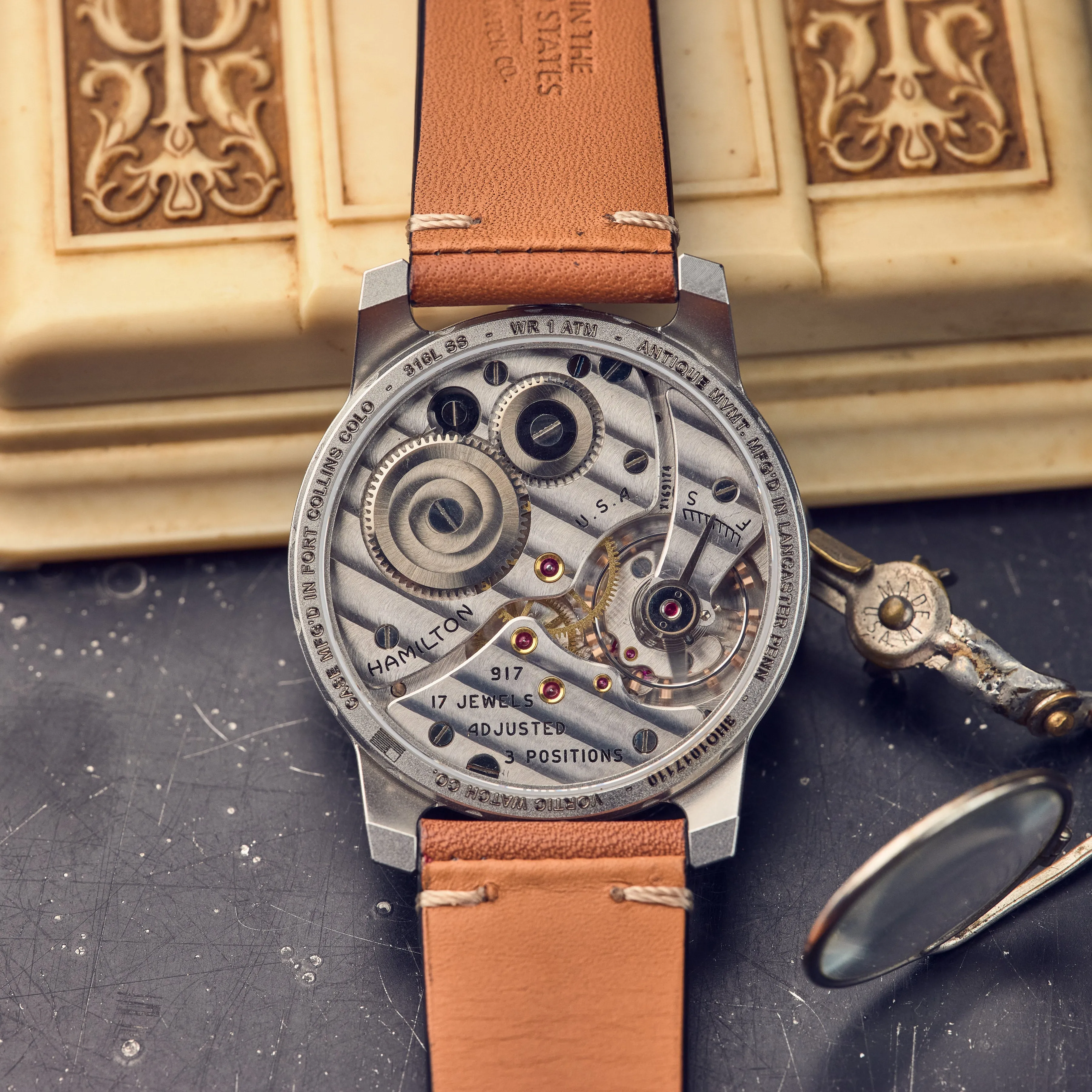
Powering this timepiece is a 17-jewel Hamilton movement, originally produced in 1949. Inside the open caseback, a visual interplay of contrasting metals takes shape: brushed steel bridges striped with Geneva waves, bright gold-plated gears, and cleanly polished settings that highlight the thoughtful, mechanical balance of this American-made caliber.
The 43mm case is carved from American-machined stainless steel with a fine sandblasted finish, giving it a sharp, modern edge while retaining a rugged tactility. A vertically grooved crown in matching sandblasted steel offers ergonomic precision, while the bronze buckle introduces a warm accent that complements the camel-toned leather strap. Together, the mixed metals and color choices across the piece create a thoughtful harmony—modern, balanced, and entirely unique.
In 1949, as this original pocket watch movement was rolling off the line, the first automatic streetlight system was installed in New Milford, Connecticut. Using electronic timers and sensors, it marked a pivotal moment in the evolution of infrastructure automation in postwar America—an innovation echoed in the mechanical ingenuity of this handcrafted timepiece.