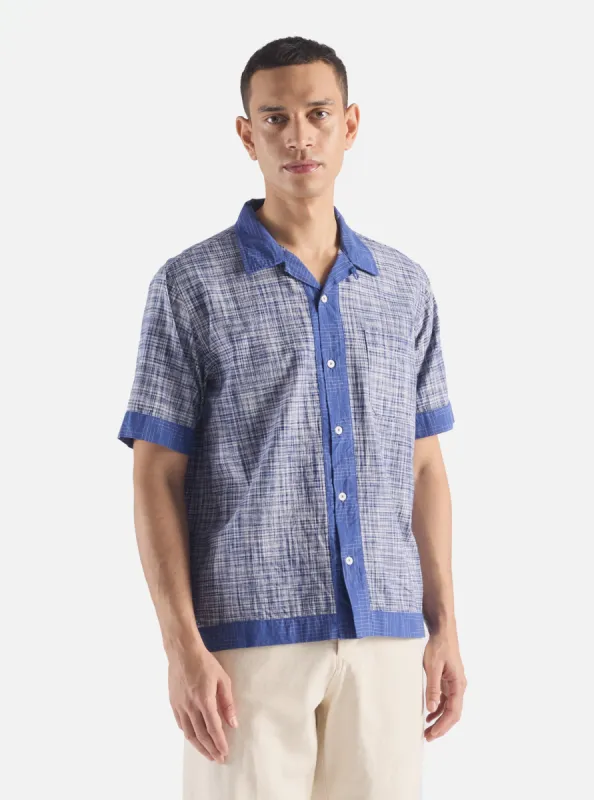
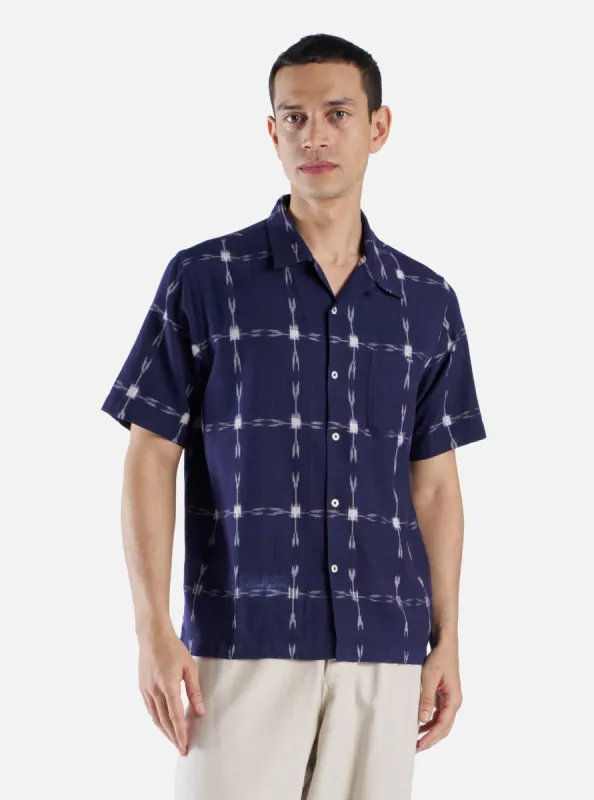
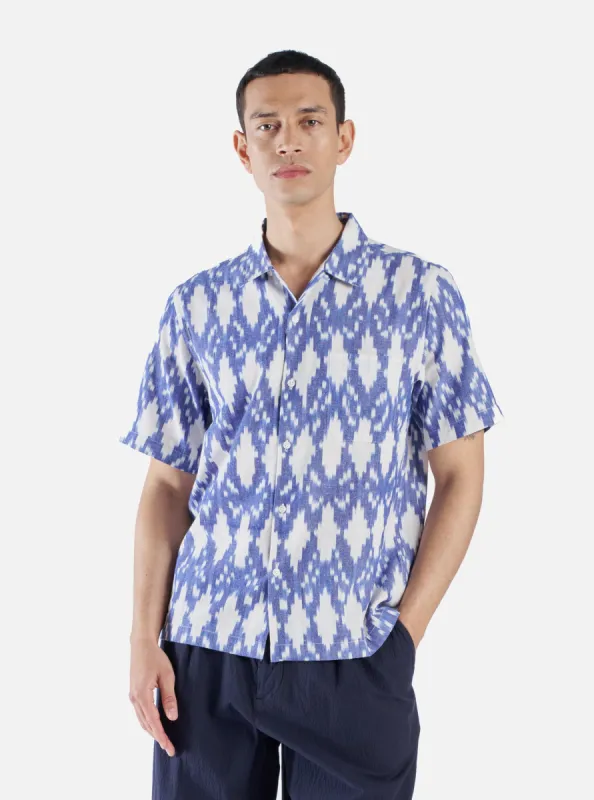
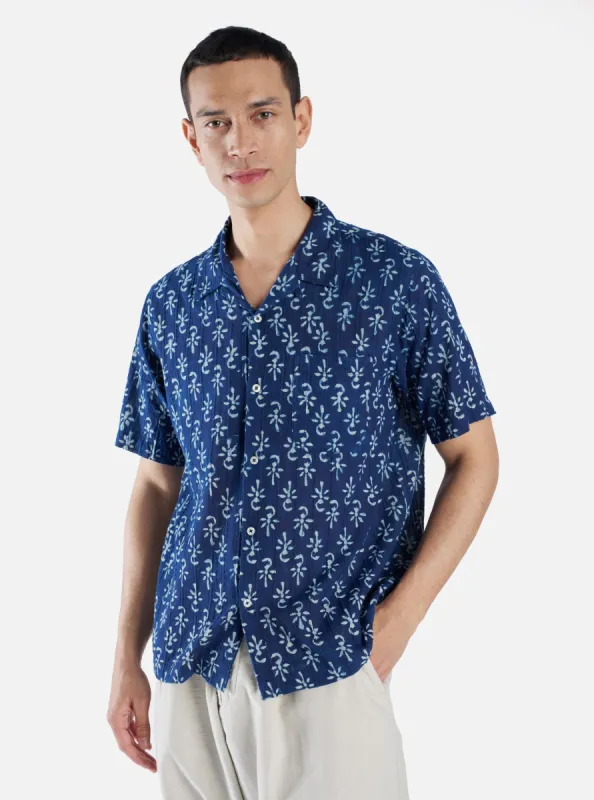
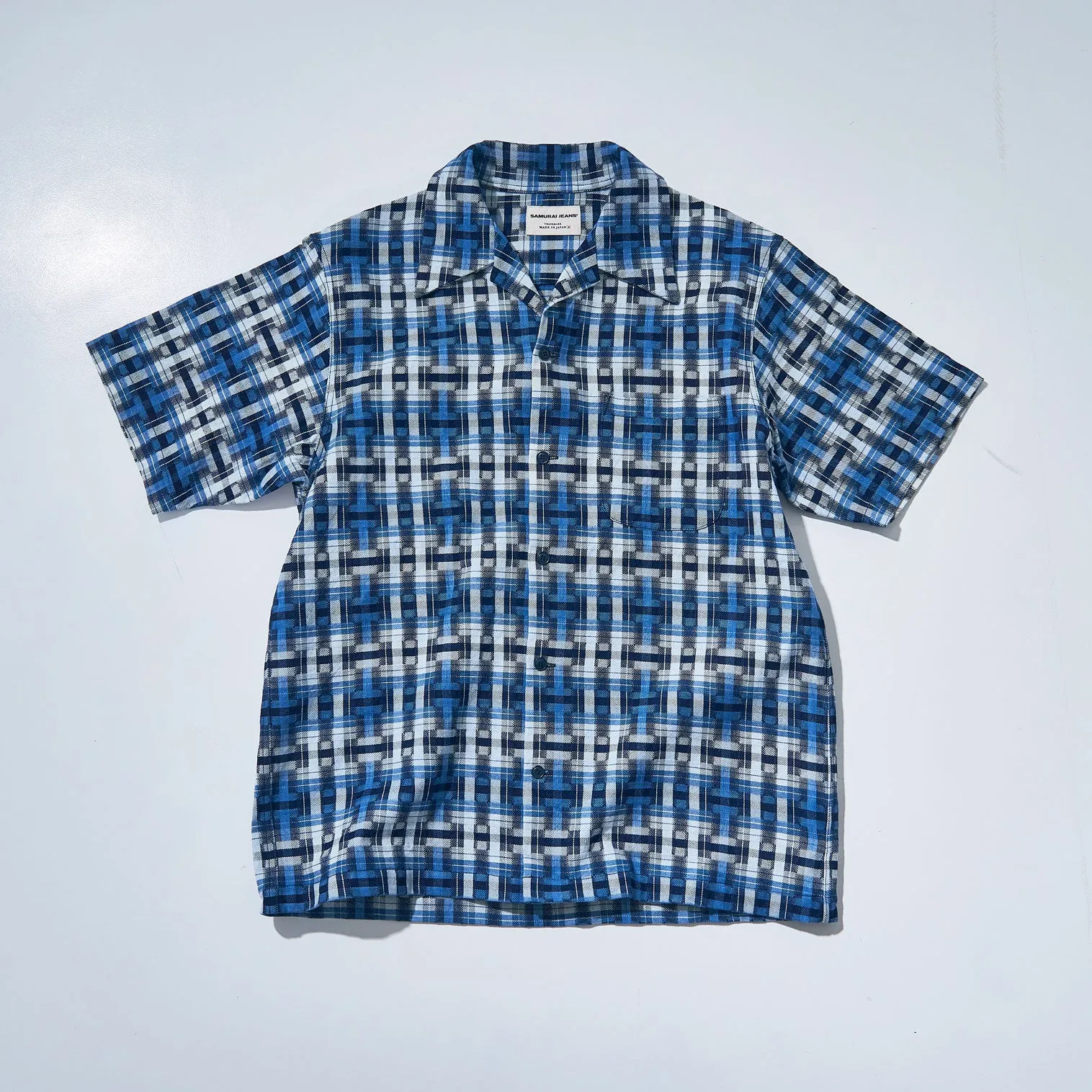
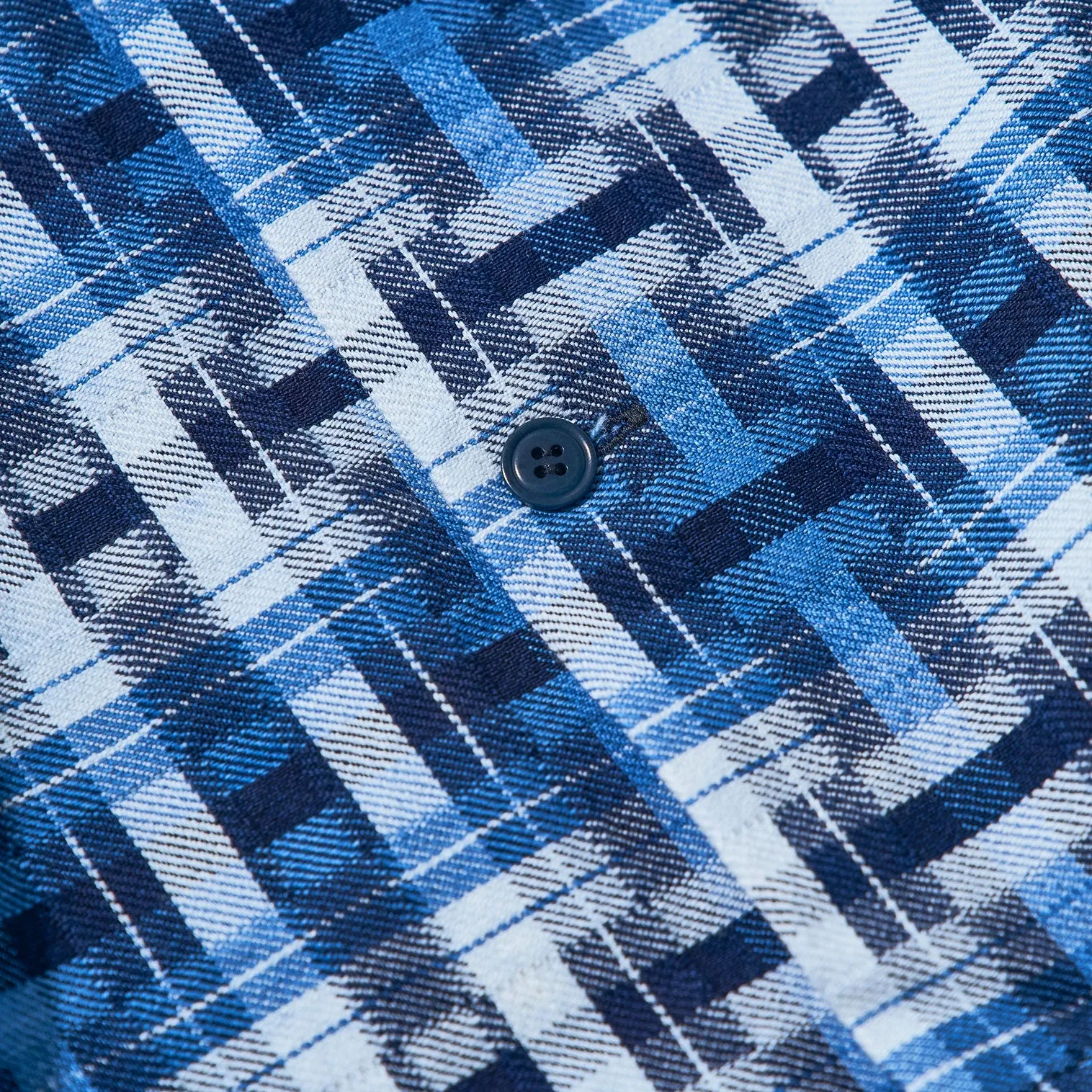
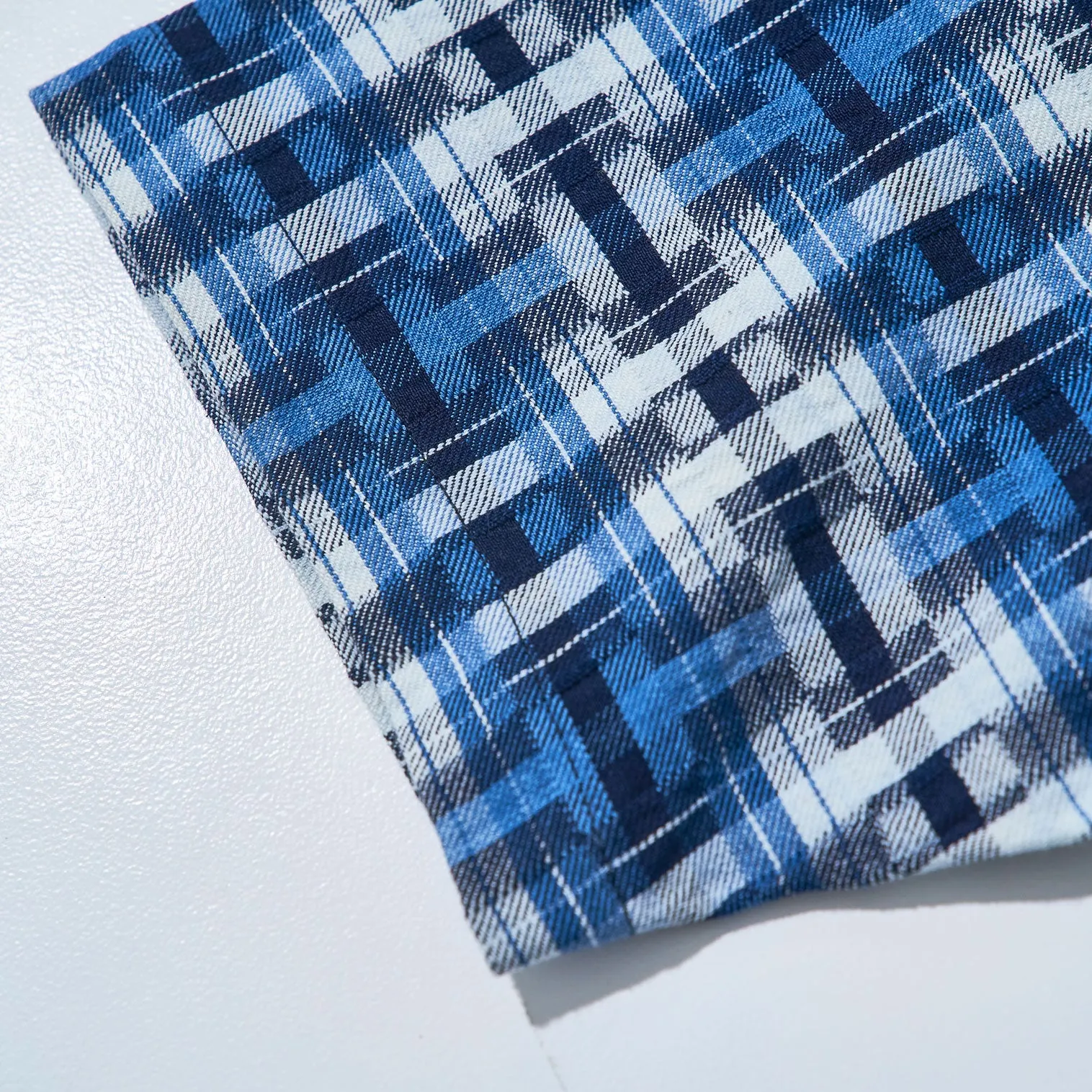
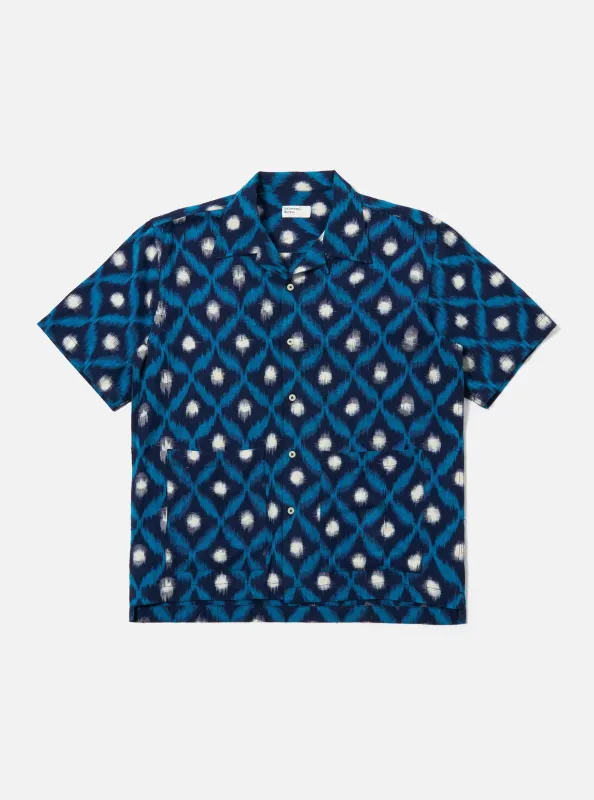
This short-sleeved open-collar shirt features a unique indigo 'broken lattice' fabric, blending dark and pale blue tones for a striking visual effect. The simple design includes a single pocket and generous room in both the body and sleeves, ensuring comfort and style. The intricately woven fabric, created using the traditional kasezome dyeing method, promises a beautiful fade over time, making each wear uniquely yours. Perfect for casual outings or relaxed gatherings.
From the brand: A short-sleeved open-collar shirt made of original indigo "broken lattice" fabric. It has a simple design with only one pocket and a pattern that leaves fairly generous room in the body and sleeves.
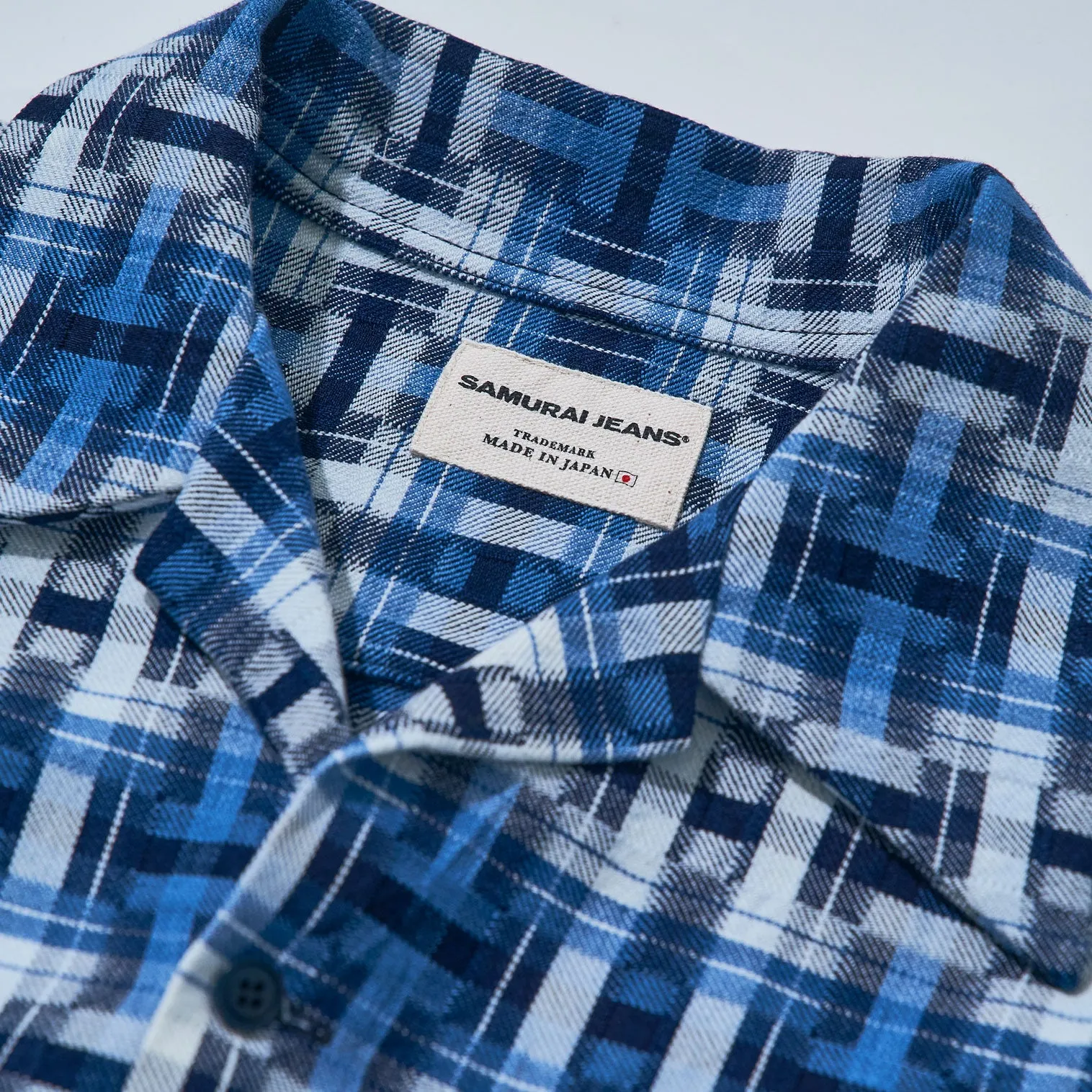
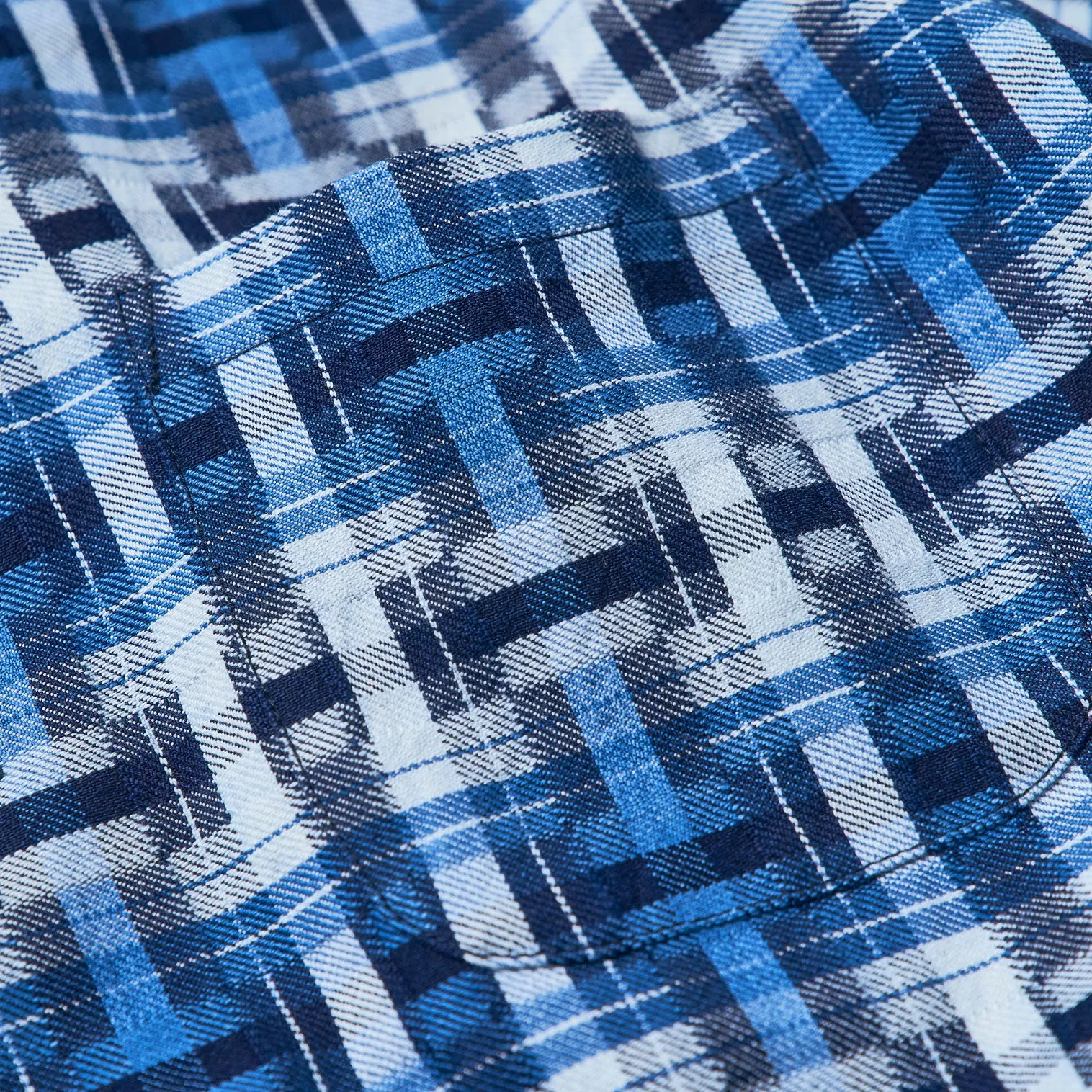
This "broken lattice" fabric is woven with threads dyed in both dark and pale blues using natural and synthetic indigo along with a kinari yarn. By dyeing the threads using a method called kasezome, the dye penetrates right to the core of the yarn and causes the fabric to fade slowly. Although the color scheme is a simple block check, the irregular twill weave structure has been tweaked to give a complex plaid-like pattern that looks like it's partly collapsed, or "broken".
Kasezome dyeing: A time-consuming technique in which cotton yarns are dipped into a vat or pot of dye and then removed and squeezed out, exposing the yarns to air to oxidize and bring out the color of the dye. The density of color can be adjusted by the number of times the process is repeated.

![[2026SS] 4100-2 Denim Open Collar S/S Shirt made by Full Count](https://d141zx60z515qt.cloudfront.net/mpfaad460bdb/pr68df5a359053c346cf5d890e/img45527_800w.webp)
![[2026SS] 4097-2 US Army Pullover Black Covert Chambray Shirt made by Full Count](https://d141zx60z515qt.cloudfront.net/mpfaad460bdb/pr68df5a159053c346cf5d8909/img98007_800w.webp)